
This year the UK RAF deployed eight Typhoons and over 330 personnel to Nellis Air Force Base led by Group Captain Lefroy. Usually, what happens in Vegas stays there, but here the commander answers our questions about the rigorous training regime, how the multinational cooperation really works, and how state-of-the-art tactics come together in the skies of Nevada.
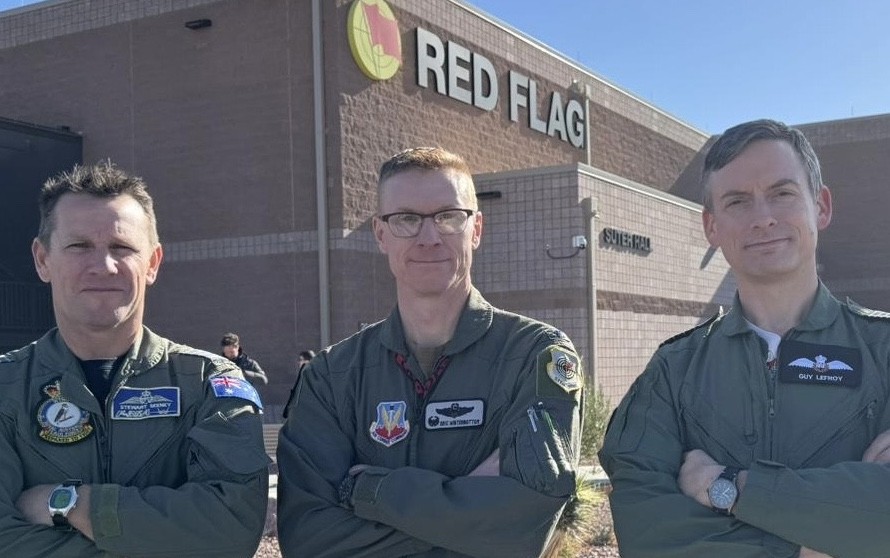
Q: What exactly is Exercise Red Flag Nellis, and why is it significant for RAF Typhoons?
A: Exercise Red Flag is one of the world’s most challenging air combat training events. It was established by the United States Air Force in the 1970s to simulate the initial, high-risk combat missions of a modern air campaign. For the RAF, participating in Red Flag is a unique opportunity to hone our skills in a realistic, high-intensity environment. It’s also a chance to foster interoperability with aircrews from the United States, Canada and Australia. That’s why we’ve been coming for 48 of the last 50 years!
Q: How does the RAF contribute to the exercise, particularly with the Typhoon fleet?
A: The RAF has eight Typhoons, supported by a Voyager refueller and a detachment of over 330 personnel. This presence underscores our commitment to Red Flag.
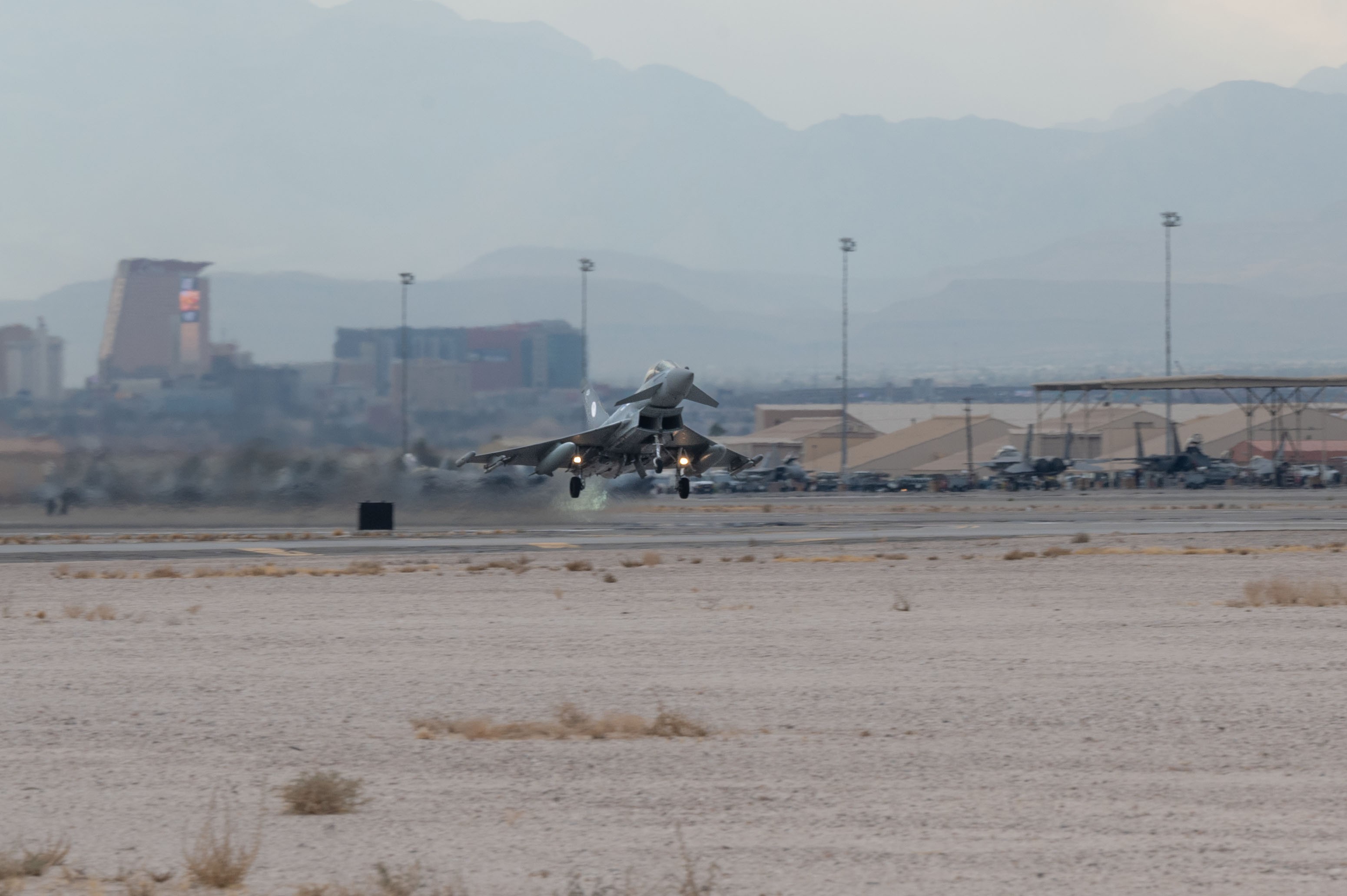
Q: What are the key training benefits for RAF pilots?
A: Red Flag is unique. It offers unparalleled training because you fly with such large groups of aircraft. Individual pilots gain critical experience, which enhances their tactical decision-making, coordination and overall combat readiness. Whether they are junior pilots or mission commanders in the making, every participant will become much better at that aspect of their job by having been here.
Q: What’s your role during the exercise?
A: Our leadership team is focused on ensuring that every squadron receives the support necessary for success. This involves coordinating logistics and operational support, enabling pilots to concentrate fully on their training.
Q: How is the overall exercise structured from an RAF perspective?
A: The RAF’s commitment at Nellis spans roughly four weeks. This period includes two dedicated weeks at Red Flag, followed by participation in the separate Bamboo Eagle Exercise, along with additional time allocated for setup and debriefing. This timeline ensures that every mission contributes effectively to the cumulative combat readiness and experience of the pilots.
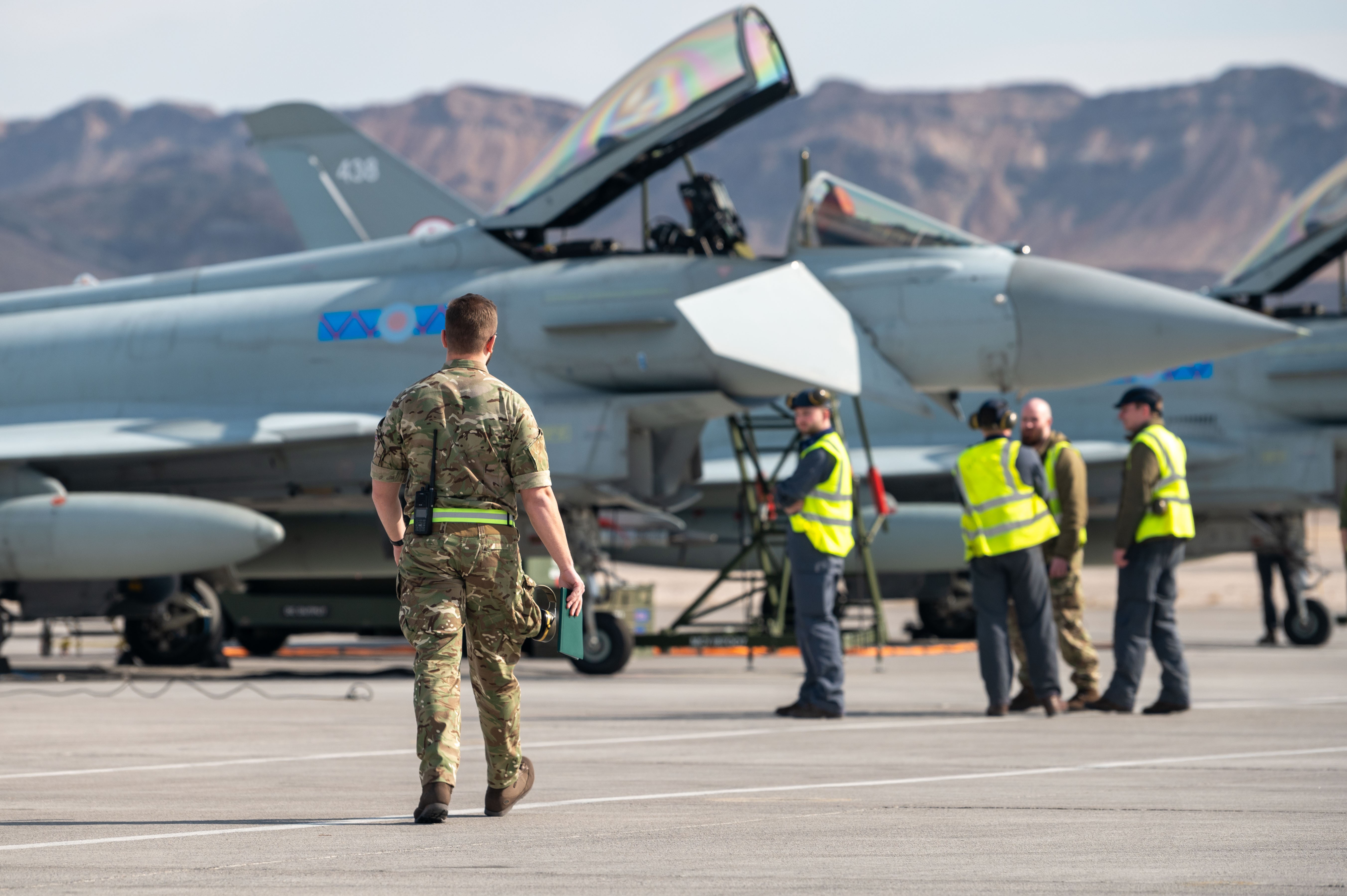
Q: In what ways does multinational participation enhance the training experience?
A: The presence of aircrews from the United States, Canada and Australia introduces a valuable mix of tactics and operational doctrines. This diverse collaboration enriches training by challenging RAF pilots to integrate different strategies and technologies, ultimately preparing them for the complexities of modern, multi-domain warfare.