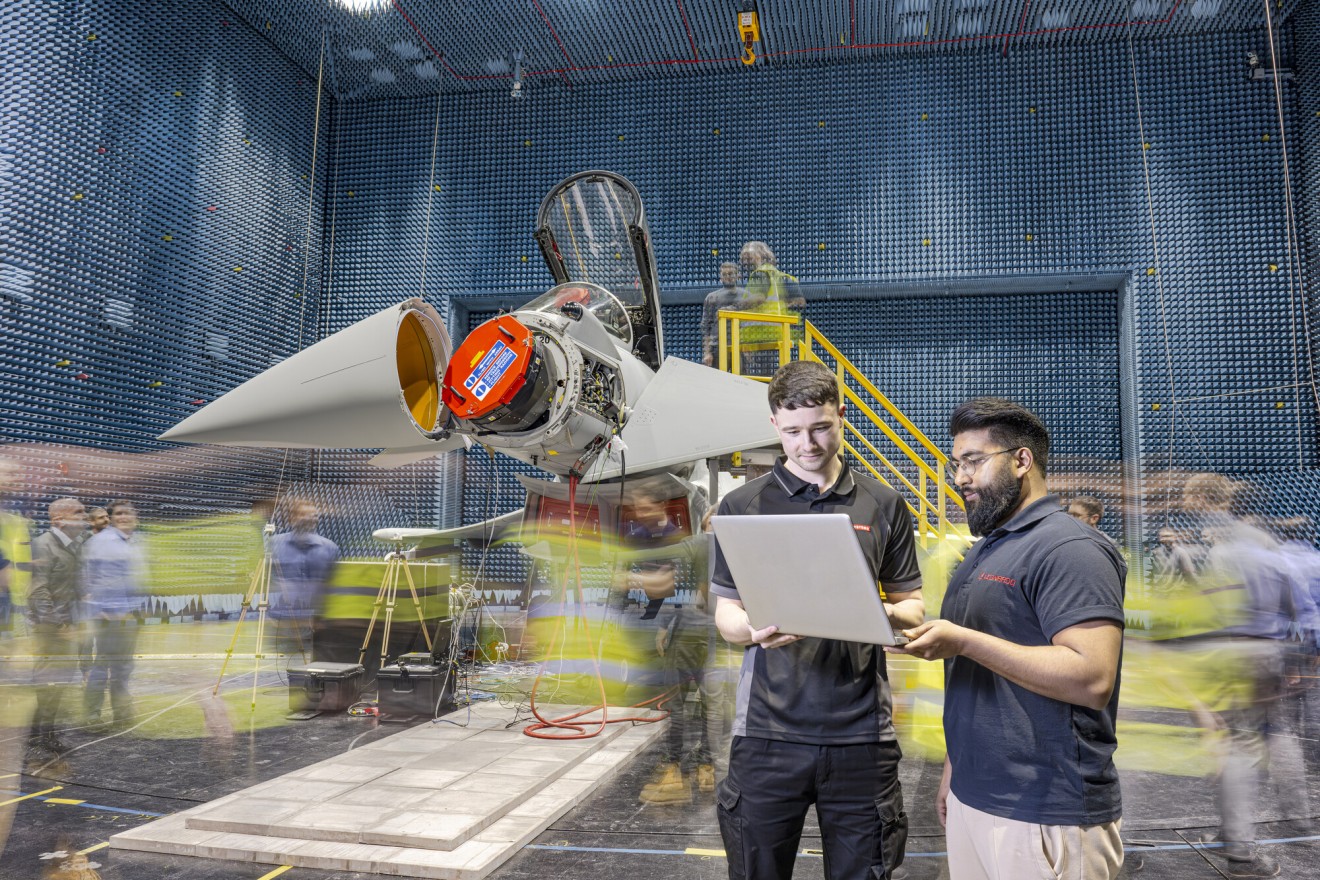
The radar starts first time, every time — whether the aircraft is in the Arctic or the desert.
A Eurofighter Typhoon pilot processing a fast-moving tactical picture is not relying on a single sensor. Radar, defensive aids, infra-red search and track, radios, datalinks — each feeds information into a fused picture designed to support decisions that may come down to fractions of a second. Whether a contact is friend or foe, whether a weapon should be released: these are judgements where the quality of sensor data is not an academic question. It is the question.
Getting that right across more than a million flying hours has demanded constant evolution.The CAPTOR-M radar that entered service in 2003 remains operational with the Typhoon nations, but the threat environment it was designed for has changed fundamentally.
The range and speed at which adversary aircraft now need to be detected called for a step change.
That arrived with the European Common Radar System (ECRS) Mk0. This is an Actively Electronically Scanned Array (AESA) radar is paired with an innovative mechanical repositioner that extends the system’s field of regard, well beyond that of a conventional fixed array. Detection performance, situational awareness and freedom of manoeuvre all moved forward significantly.
But evolution, by definition, does not stop. Development of the ECRS Mk2 radar is already under way in Edinburgh. It represents something more than incremental improvement: a fully integrated electronic warfare capability built into the radar itself, alongside enhanced traditional radar functions.
When fielded, it will open the door to mission types, including Suppression of Enemy Air Defences (SEAD), that Eurofighter has not traditionally undertaken. Combined with new digital architectures, enhanced communications and the Striker II helmet-mounted display, it points to a Typhoon that will operate in a fundamentally different battlespace, alongside fifth-generation aircraft and autonomous collaborative platforms.
Shaped by the people who face the threat
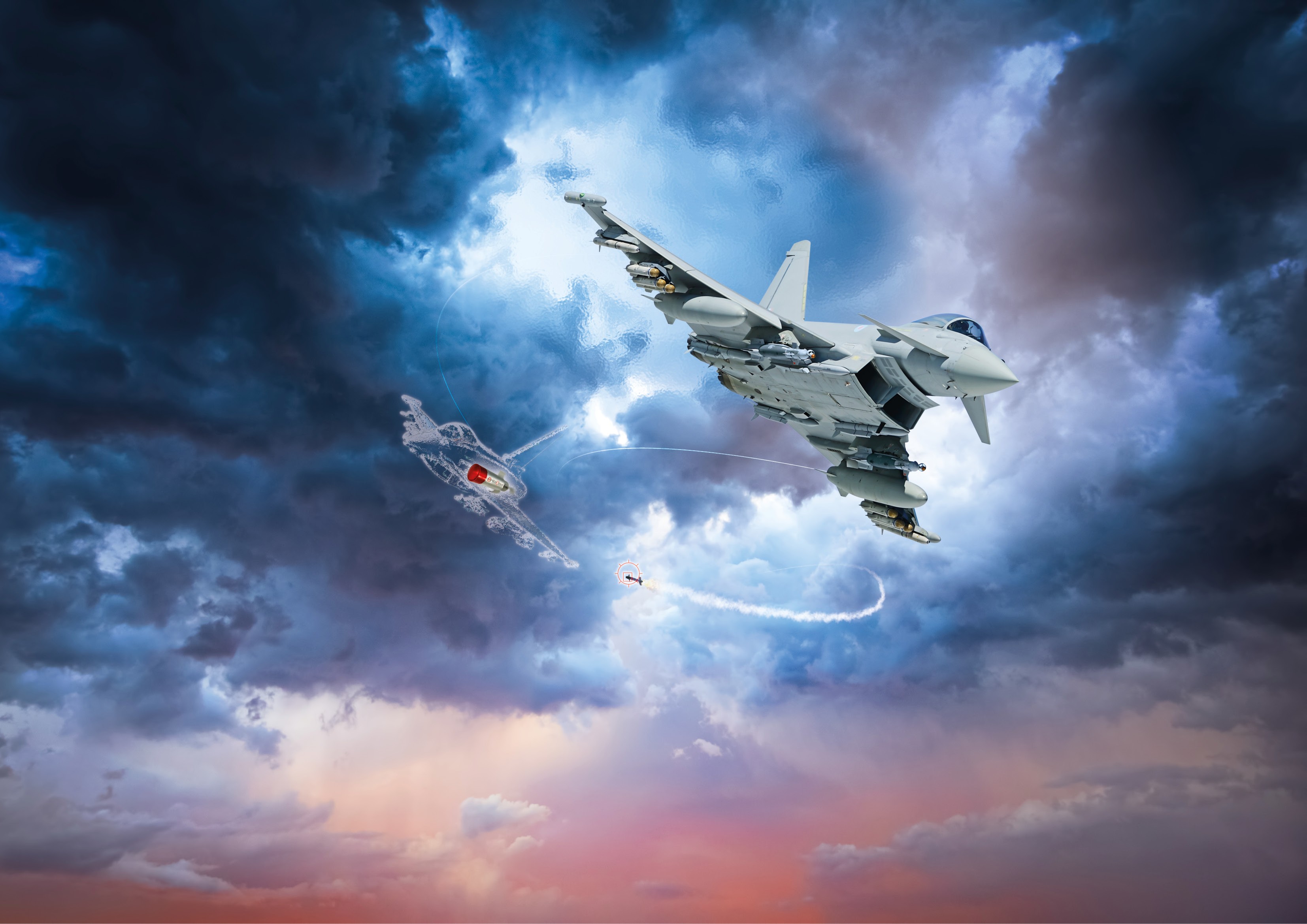
The sensor evolution extends across the full Defensive Aids Sub-System (DASS), too. Capabilities such as Britecloud — an expendable active decoy designed to disrupt incoming missiles’ tracking systems and generate significant miss distance have been introduced to counter increasingly sophisticated threats. Many of the refinements to Eurofighter’s Praetorian DASS have been shaped directly by front-line operators and specialist electronic warfare communities.
Each iteration builds on genuine operational understanding rather than starting from a blank page.
Aircrew routinely challenge the engineering teams to employ existing cockpit symbology in new ways, helping them interpret complex situations more intuitively. The engineers respond by evolving the underlying software. It’s a cycle of operational feedback and technical refinement that has continued for over two decades.
Proving it before it flies
None of this capability reaches the aircraft without being rigorously proven first. At high-G, a Typhoon is an inhospitable environment for delicate micro-electronics. The testing regime that sits behind every software release and every hardware upgrade exists to ensure that what is delivered can last decades in the air.
That combination — relentless capability evolution underpinned by rigorous engineering validation — is what has allowed the sensor suite to remain credible and current across a million flying hours. The engineers who maintain and develop these systems, many holding doctorates and decades of specialist experience, represent a depth of knowledge that is itself a strategic asset. Their continuity within the programme ensures that each iteration builds on genuine operational understanding rather than starting from a blank page.
The next million hours will be flown in a very different operational context. The sensor suite will be central to ensuring that Typhoon remains decisive in that environment — and that its pilots return home safely.
"First time, every time”
“We use a large range of tests to ensure what is released to an aircraft is reliable. Software releases undergo hundreds of hours of testing on a real radar system on ground rigs, making extensive use of emulators to replicate what the radar will be doing in flight.
For hardware, new technology is subjected to accelerated life testing — thousands of cycles of rapid heating and cooling. We apply a lifetime’s worth of vibration to a representative radar to ensure the delivered radar can last decades in the air.
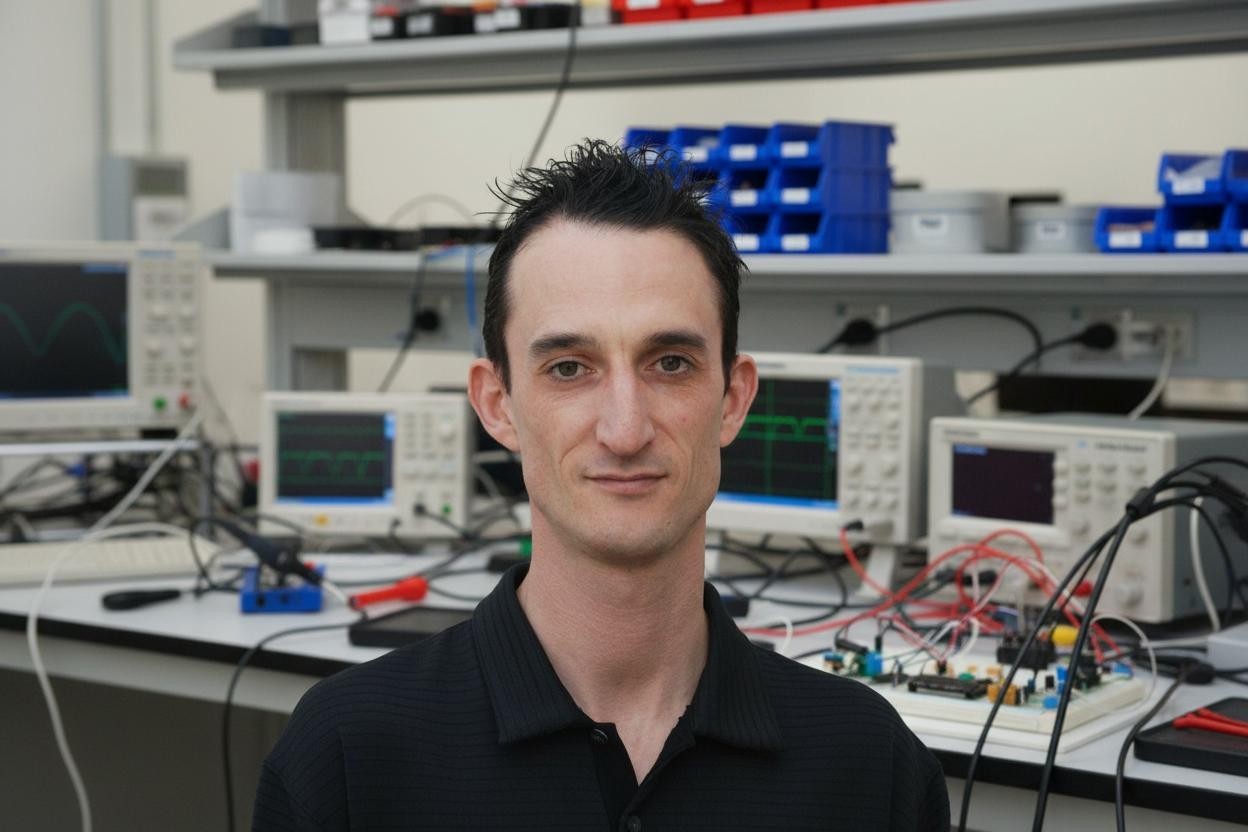
We test complete systems in thermal chambers at temperatures that exceed worst-case aircraft conditions, to ensure radars start up first time, every time, regardless of whether it’s in the Arctic or the desert.”
Steve Bevan, Captor-E Chief Engineer