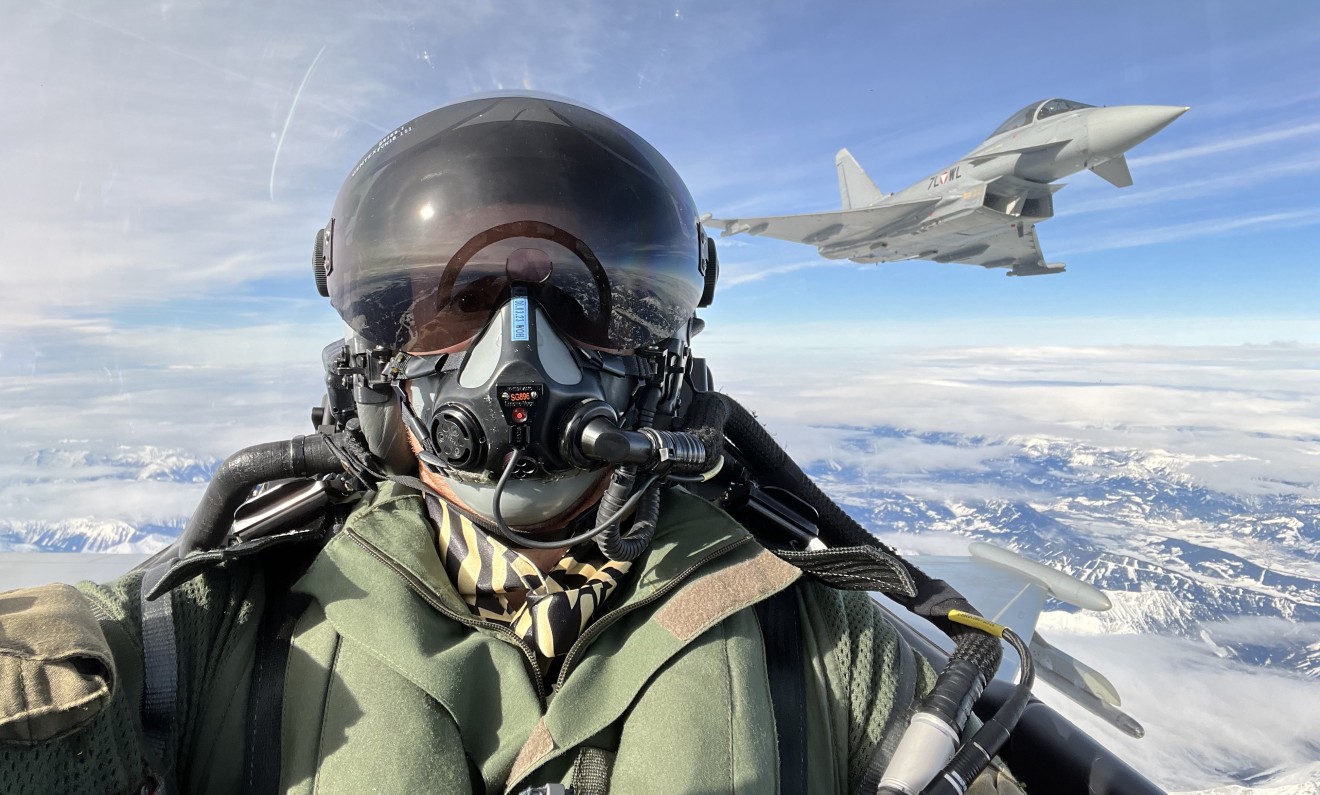
Q: Can you tell us about your current role and what it entails?
A: Right now, I have a dual role. I fly wide-body jets as a civilian airline pilot and also serve as a military flight instructor on various airframes for the Austrian Air Force. It’s an interesting balance between two very different worlds. In the civilian world, flying is about efficiency and cost-effectiveness — getting from A to B as smoothly as possible. In the military world, flying is just the starting point; it’s about tactics, precision, and adapting to the mission. The contrast keeps things exciting and challenging.
Q: Let’s rewind. What sparked your passion for aviation?
A: It all started when I was eight years old. My dad took me to Austria’s national holiday celebration, at Vienna’s Heroes’ Square. I had the chance to talk to an Air Force helicopter pilot, and that was it — I told my dad that day: “Flying military jets is my goal.” Fast forward 20 years, and I found myself flying the Eurofighter Typhoon for the Austrian Air Force.
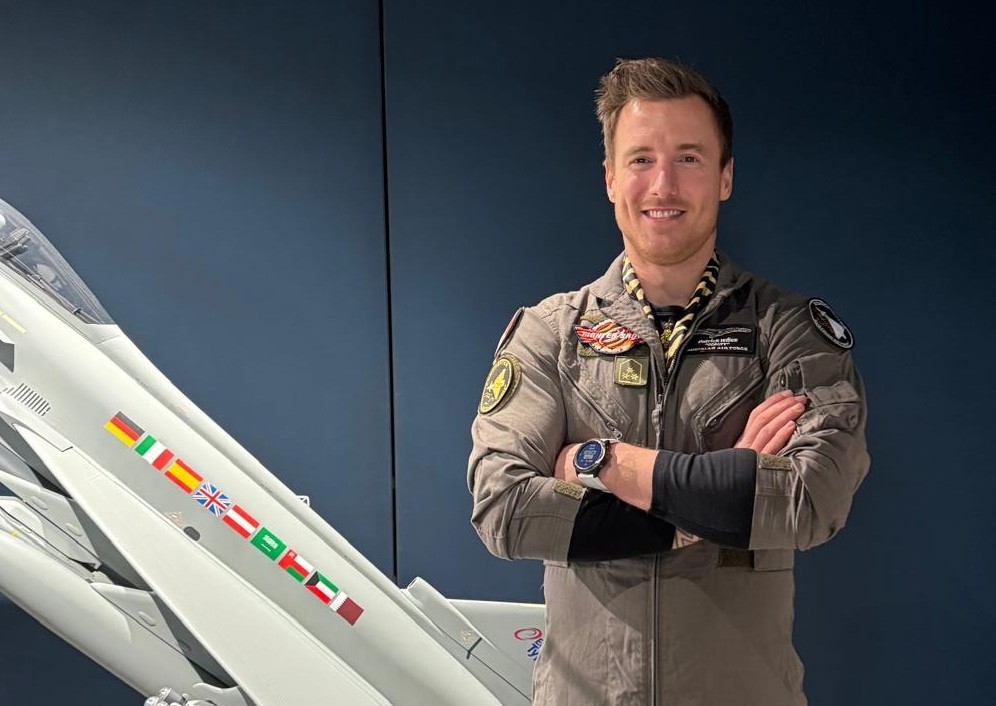
Q: What was your journey to becoming a Typhoon pilot like?
A: It was far from ordinary! I joined a military boarding school at 14, where wearing a uniform and military training was part of my life. The Air Force funded our glider and aerobatic licences, which was a huge incentive. After graduating, I joined the military academy and underwent a rigorous three-stage selection process to become a pilot. The odds are tough — only one in 400 applicants gets selected. In Austria, training to fly the Typhoon takes eight years, so patience and perseverance were key.
Q: Do you remember your first flight in the Typhoon?
A: Absolutely. My first flight was in the front seat. We took off through heavy clouds and straight into an air-to-air refuelling demo. I remember sitting there, overwhelmed, thinking, “What do I do now?” It was surreal but thrilling.
I’ll never forget the sheer power of the Typhoon during a full reheat take-off.
Then came my first solo flight. I’ll never forget the sheer power of the Typhoon during a full reheat take-off. There is nothing else quite like it — the engines produce such insane thrust. Every time I think about it, it puts a smile on my face.
Q: Were there any mentors who inspired you along the way?
A: My dad was my first role model. He was always someone I could look up to. Then there was Sandman, a legendary Typhoon pilot in the Austrian Air Force. He was 200% into the fighter business, with stories that bordered on mythical. His passion and skill made me want to emulate him.
Q: What makes the Typhoon such a special aircraft to fly?
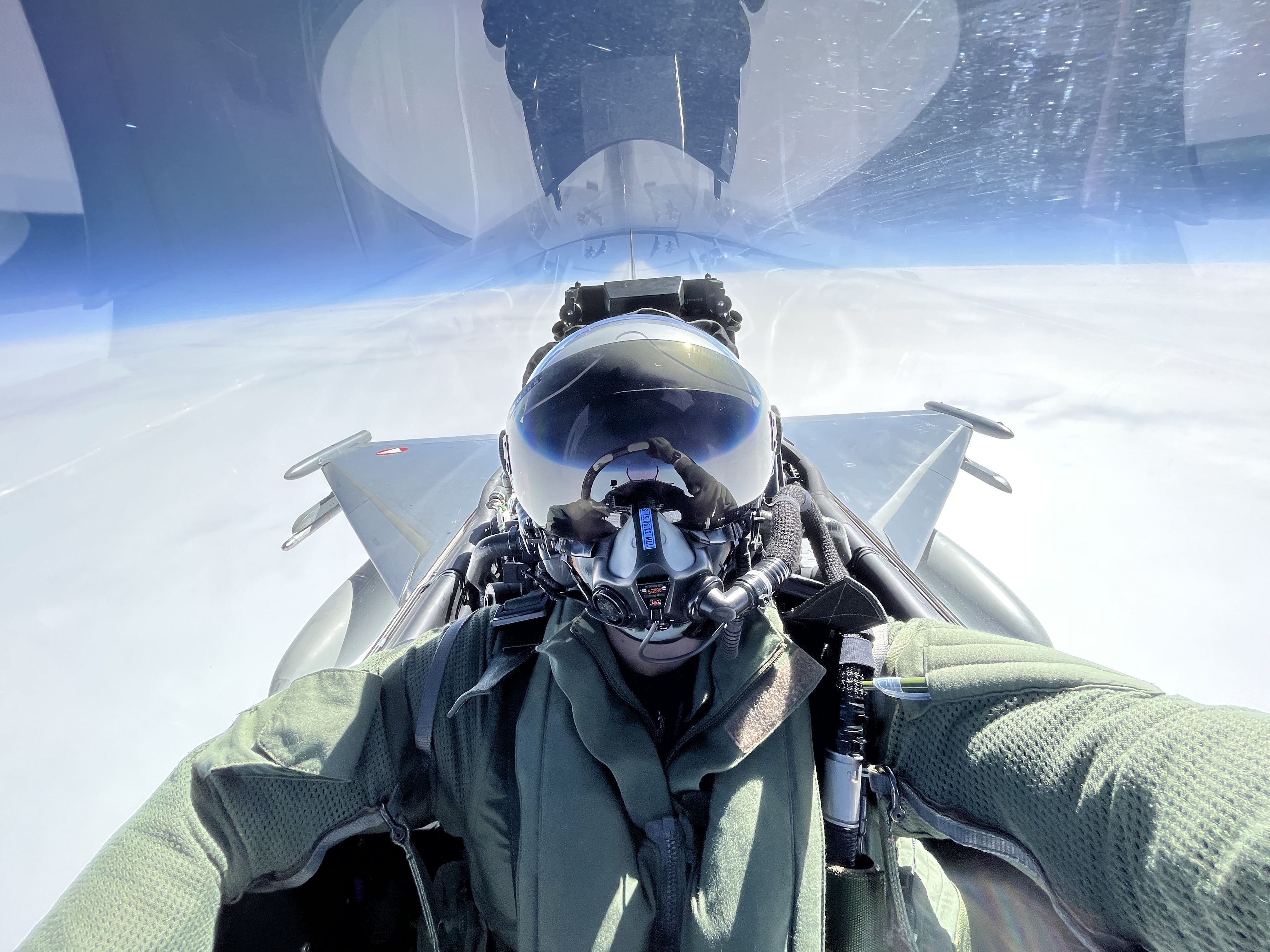
A: The Typhoon is an extraordinary machine because of its airframe, engines, and human-machine interface. Whether you’re in a dogfight or a beyond-visual-range engagement, the Typhoon’s performance stands out. Its engines and agility give you an edge — if everything else is equal, you’re likely to win.
Flying the Typhoon is like playing an instrument. Initially, there’s a steep learning curve, but over time it becomes second nature. Once you get used to it the aircraft feels like an extension of your body — its radar becomes your eyes, its wings your shoulders, and its weapons your fists.
Q: What skills are crucial to being a successful Typhoon pilot?
A: Discipline is vital. It’s about sticking to your techniques and timelines, even when the temptation to improvise is strong. Another key skill is information management. The cockpit throws a constant stream of data at you — altitude, radar, formation details, and so on. You have to prioritise what’s most critical for the mission at any one moment in time.
The real challenge is processing all the information and making split-second decisions
For any experienced pilot, the actual flying element of Typhoon isn’t hard; the aircraft is designed to do the heavy lifting. The real challenge is processing all the information and making split-second decisions.
Q: Can you share a memorable moment from your time in the cockpit?
A: One that stands out is an Alpha scramble. I was a wingman at the time, and we were tasked with intercepting two unauthorised aircraft in Austrian airspace. It was a clear day, and the speed and agility of the Typhoon made the mission exhilarating. At one point, I was overtaking the target at 500 knots and had to quickly adapt to ensure a safe and successful interception. Moments like that remind you of the sheer power and capability of the Typhoon.
Q: How does Austria’s landscape influence your flying?
A: Flying in Austria is unique because of its mountainous terrain. The valleys create a natural playground for manoeuvres, but they also demand respect. There’s a rule that we must stay at least 500 feet above the valley floor, which adds an extra layer of complexity. On the flip side, the scenery is breathtaking, and there’s nothing quite like flying inverted over a mountain summit with mountaineers waving up at you!
Q: What’s the biggest difference between the Austrian Air Force and other Typhoon operators?
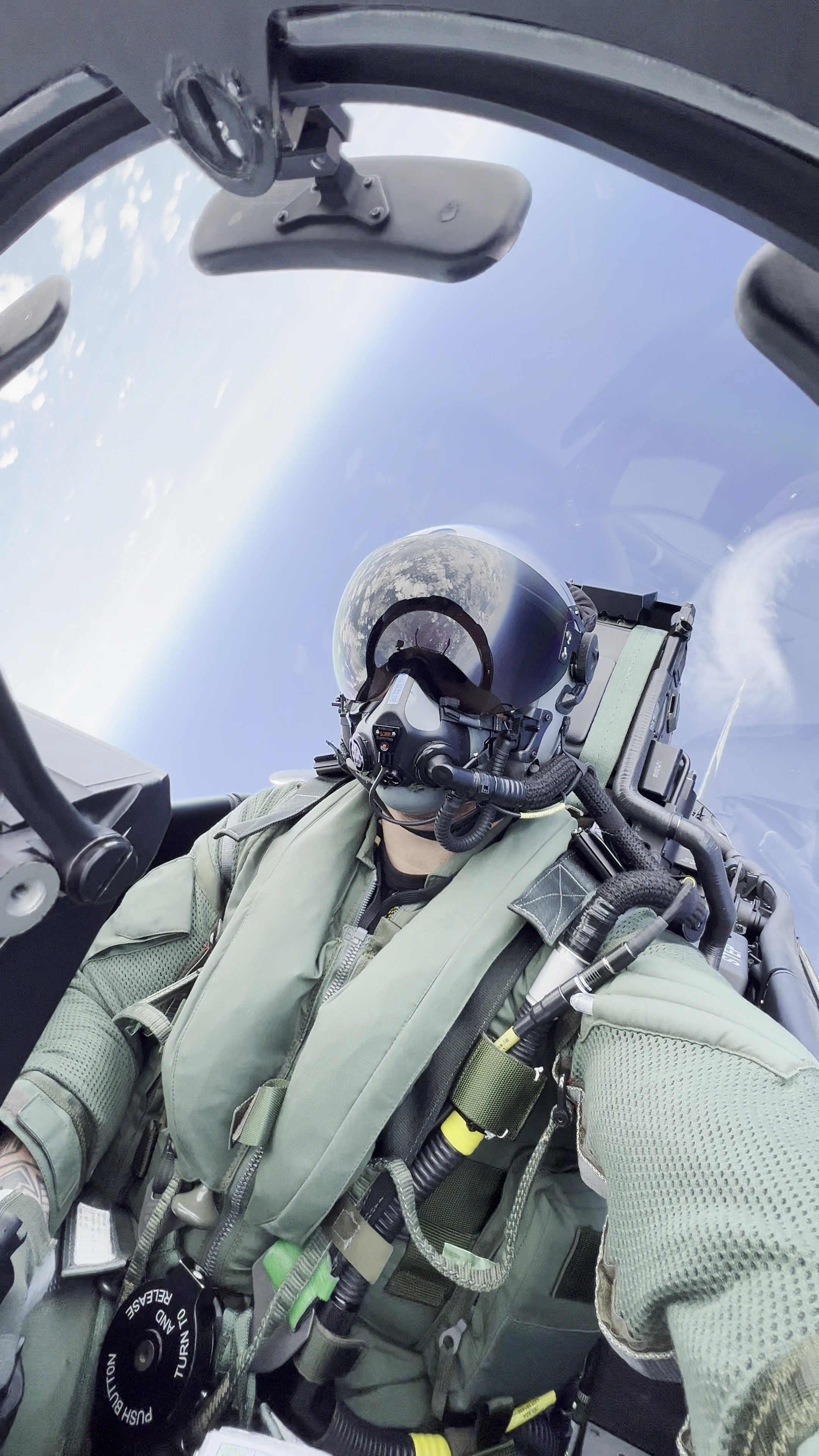
A: Austria is a neutral country, so we don’t have combat deployments like other nations. Our focus is on air policing and remaining up-to-date with NATO tactics, techniques, and procedures. We achieve this through regular participation in exercises like the NATO Tiger Meet. It’s a different kind of challenge but equally important for maintaining European air security.
Q: How do you balance life as a commercial pilot and as a military instructor?
A: It’s all about compartmentalising. As a fighter pilot, you need to focus solely on the mission at hand — nothing else matters when you’re in the air. As an instructor, the dynamic changes. You’re not just flying; you’re responsible for guiding the student and anticipating potential issues. It’s a different mindset, but one that’s incredibly rewarding.