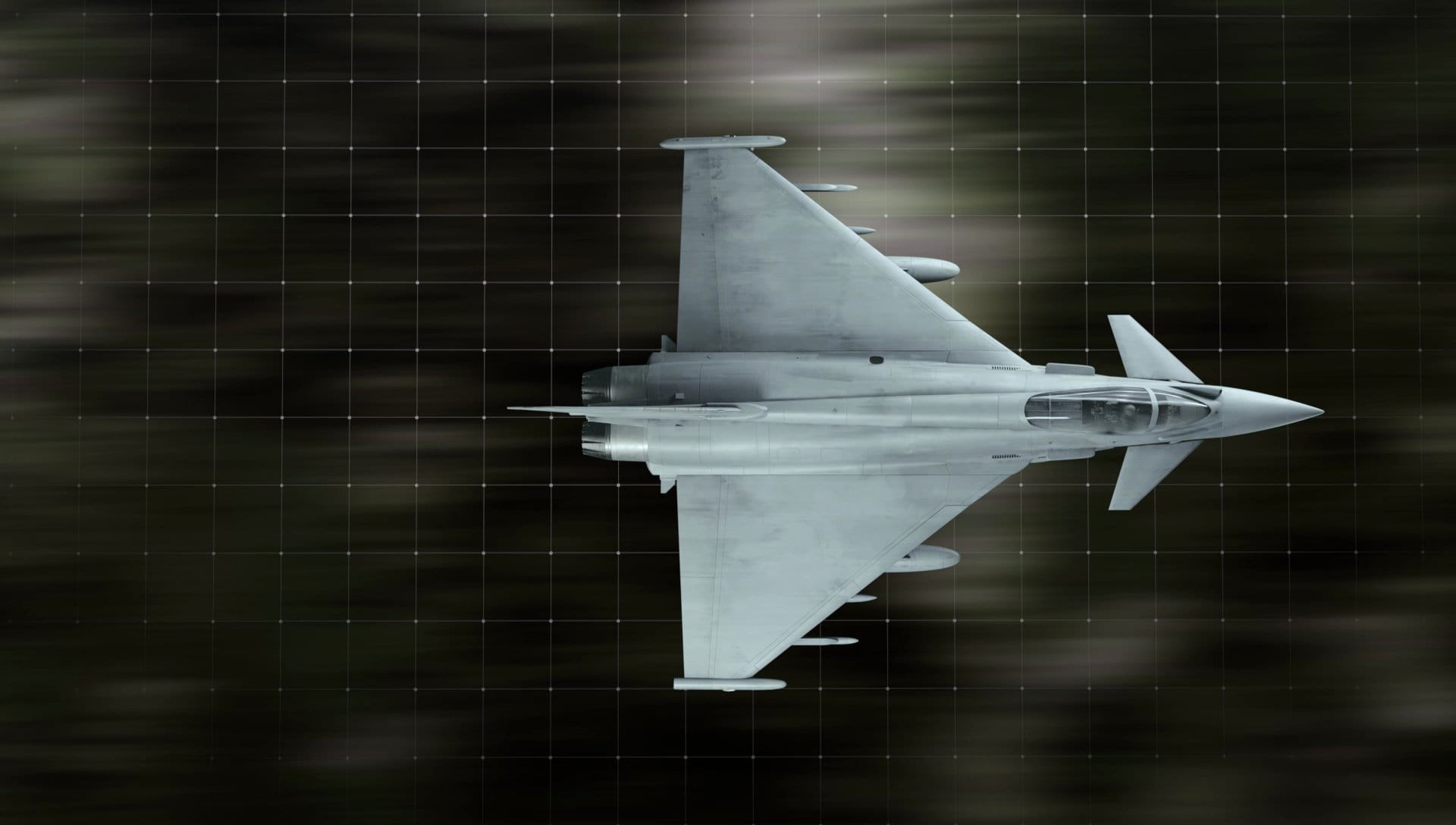
Airframe
The Eurofighter Typhoon is built with advanced composite materials to deliver a lower radar profile and strong airframe.
15% metal surface
Only 15% of the aircraft’s surface is metal, delivering stealth operation and protection from radar-based systems. It delivers both superior manoeuvrability at subsonic speeds and efficient supersonic capability to support the widest range of combat scenarios.
30% lighter
Strong, lightweight composite materials were key to the design of Eurofighter Typhoon. Using those means the weight of the airframe is 30% less than for traditional materials, boosting range and performance as well as reducing the radar signature.
Pilot inclusion
From the earliest stage, pilots were included in the design process to develop a deliberately unstable airframe that can still be flown effectively.
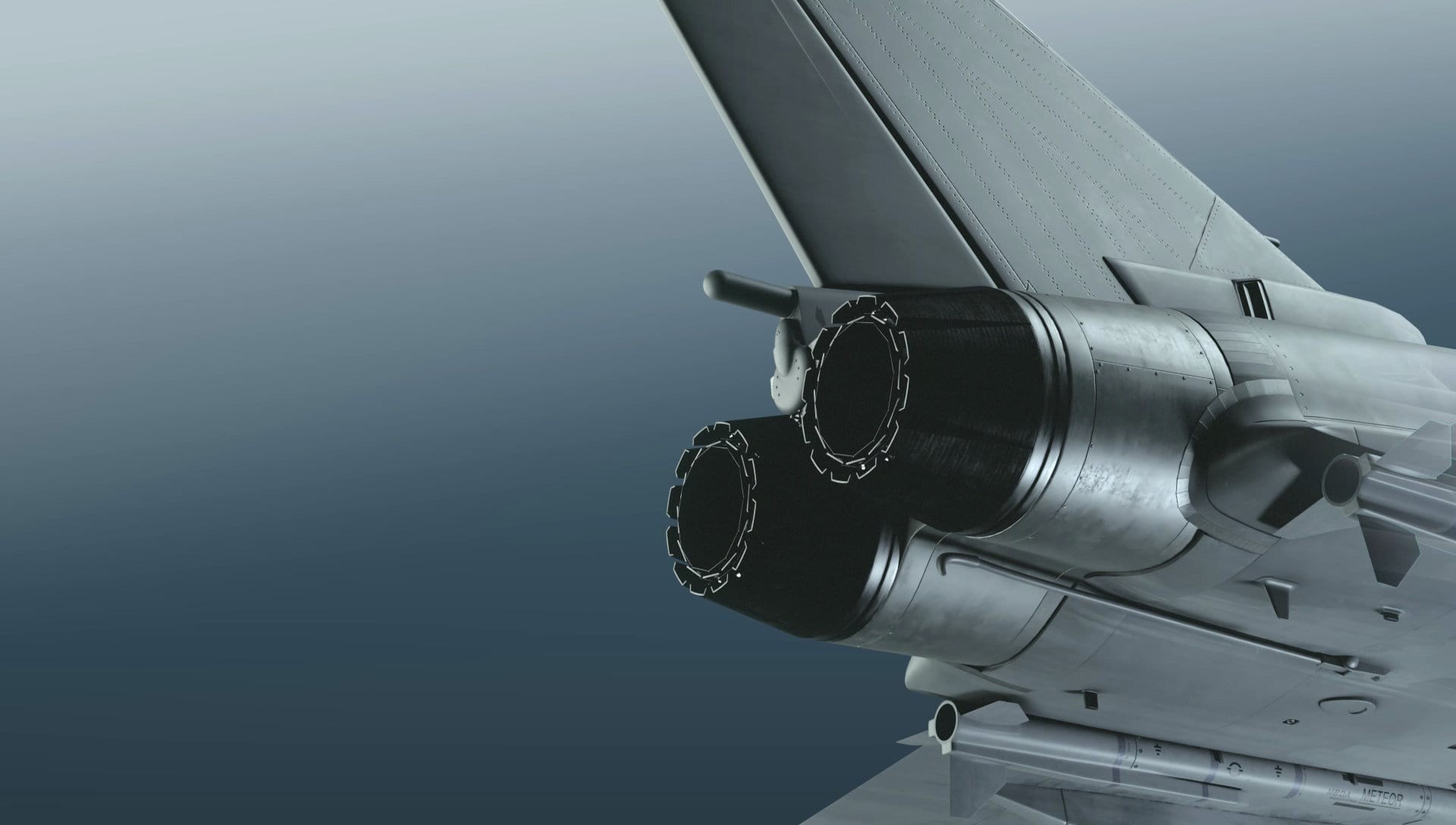
Engine
Cutting-edge engine technology has been a key part of the Eurofighter Typhoon project from the start. Up to now the EJ200 is the most reliable engine on the market.
180kn thrust
Four global companies have jointly developed the high performance EJ200 power plants that each provide 90kN of thrust from a small lightweight engine with high strength and high temperature capability.
1200 Flying Hours
Light weight engines allow the Eurofighter Typhoon to cruise at supersonic speeds without the use of reheat for extended periods. The engines deliver 1,200 flying hours without needing unscheduled maintenance through the use of advanced integrated health monitoring.
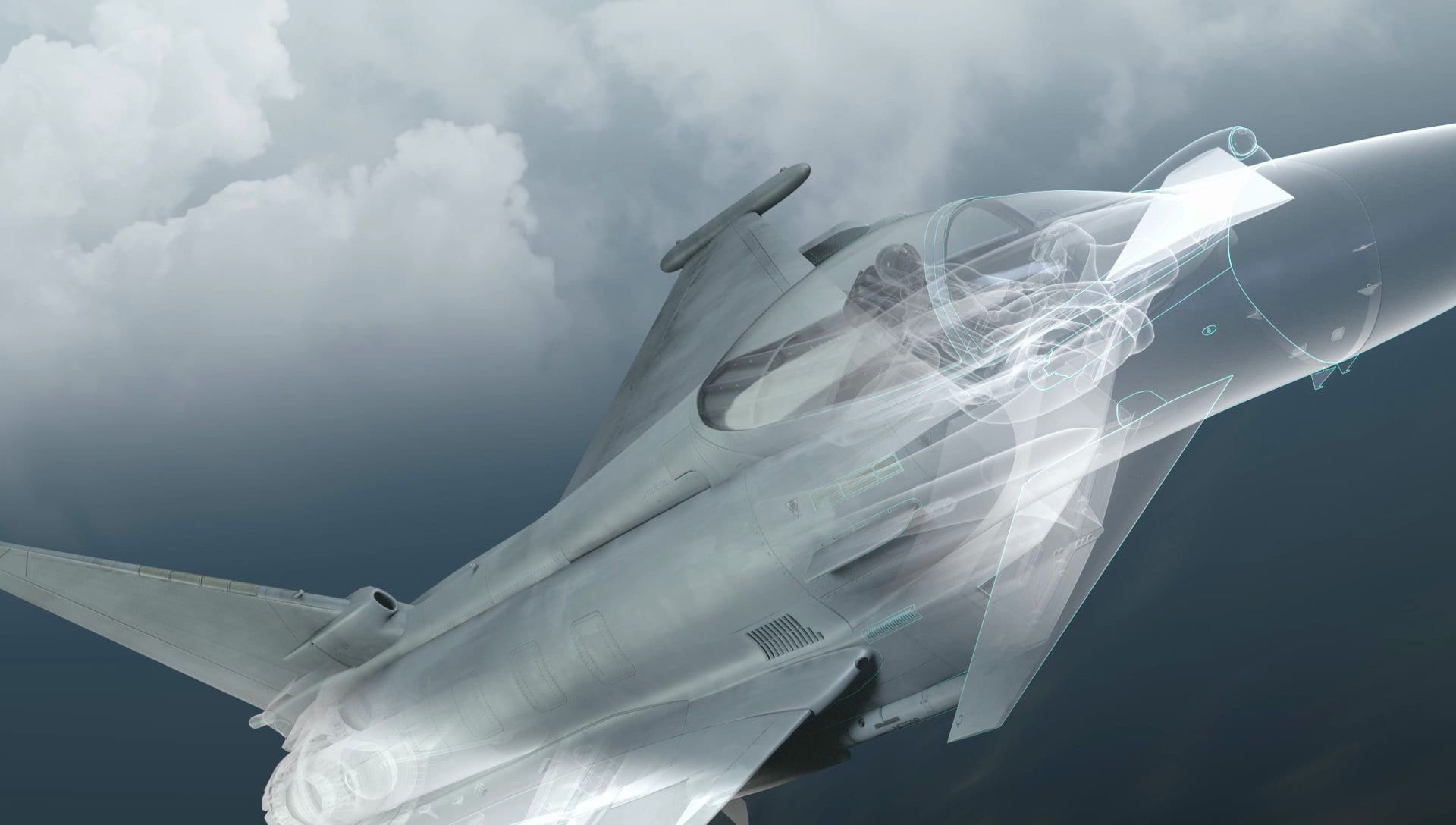
Sensors
Class leading sensors give the pilot the unparalleled situational awareness seamlessly integrating data and updating the battle space picture for actionable intelligence. The fusion information superiority allows the pilot to dominate the battlespace.
50% Wider Array
The electronically scanned radar is the primary sensor on Eurofighter Typhoon and has a full suite of air-to-air and air-to-surface modes. The capacious aperture of the Eurofighter Typhoon allows the installation of E-Scan’s optimised and repositionable array whose field of regard is some 50% wider than traditional fixed plate systems.
This wide field of regard offers significant benefits in both air-to-air and air-to-surface engagements and given the large power and aperture available provides the pilot with much enhanced angular coverage compared to fixed plate systems.
Multi-Tracking
The Pirate System (Passive Infra Red Airborne Tracking Equipment) allows simultaneous detection and tracking of multiple and manoeuvring targets through its passive sensors.
Jam Resistant
The Multifunctional Digital Information Distribution system (MIDS) allows the aircraft to securely exchange real time date between a wide variety of users, including air forces and, where appropriate, land and naval forces. It is high speed, high capacity, secure and jam resistant while able to share and receive information from other users in their network.
Threat Response
The Defensive Aids Sub System (DASS) monitors and responds to the outside world. It is installed internally and provides the pilot with an all-round prioritized assessment of air-to-air and surface-to-air threats, with fully automatic response to multiple threats.
The DASS includes Electronic Support Measures and Electronic Counter Measures pods (ESM/ECM), Missile Approach Warners (MAW), Chaff and Flare dispenser, an optional Laser Warning Receiver (LWR), Radar-Warning-Receivers (RWR) and Towed Decoy.
Identification Friend or Foe
The IFF (Identification Friend or Foe) identification system enables the Eurofighter Typhoon pilot to recognise aircraft in both military and civilian air traffic modes as friendly or potentially hostile systems.
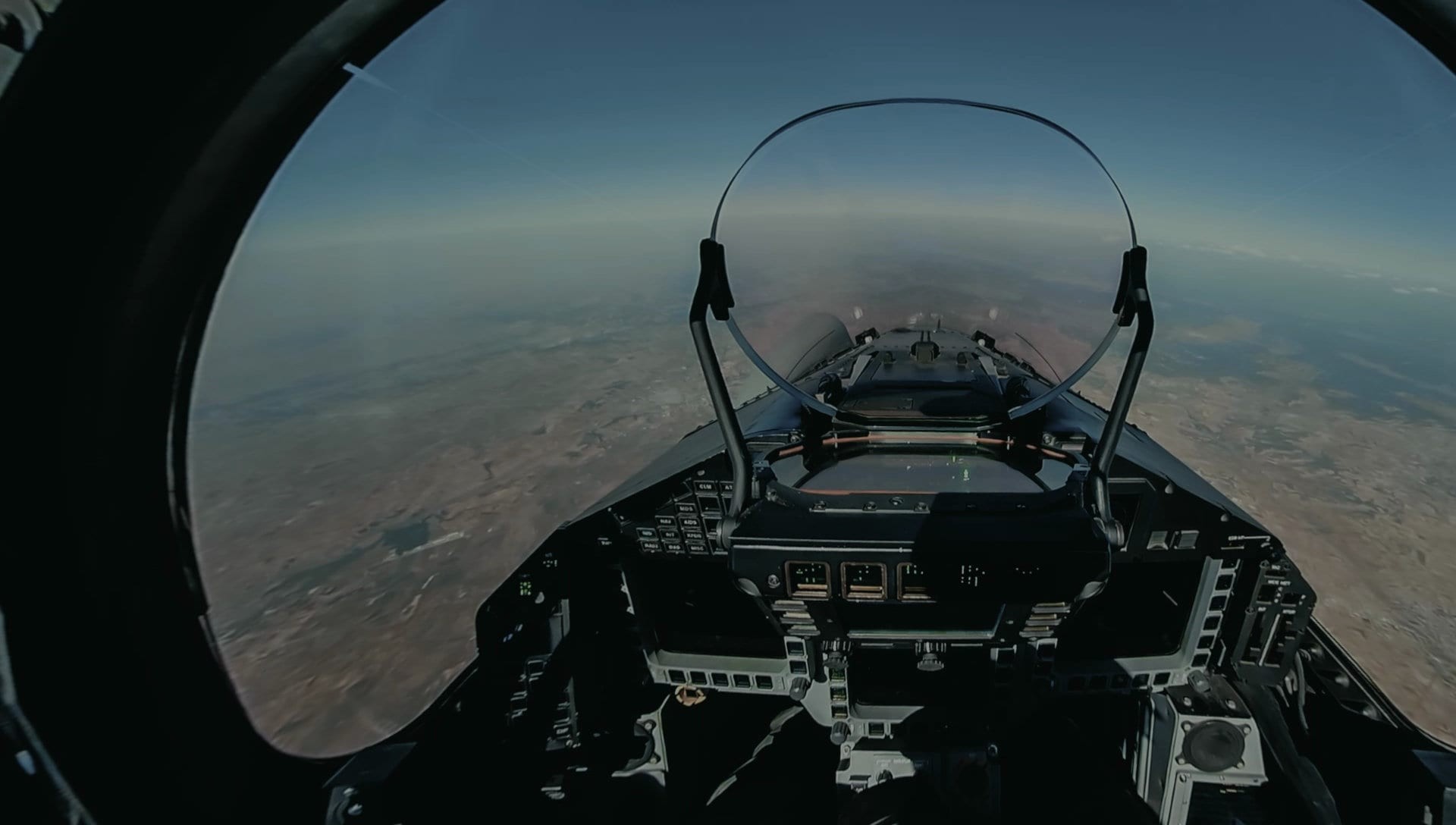
Cockpit
The advanced cockpit design and layout is based on an extensive series of formal assessments in a rapid prototype facility, undertaken by operational pilots from air forces flying the Eurofighter Typhoon. Using and upgrading the advanced digital technology not only enhances operation and survivability, but also simplifies aircraft maintenance.
Accurate
The Eurofighter Typhoon’s wide angle Head Up Display (HUD) provides the pilot with stable, accurate, high integrity, low latency eyes-out guidance with a large field of regard. The HUD offers high performance that is compatible with night vision and laser protection goggles.
Tactical
The cockpit is fitted with three identical Multi-function Head Down Displays (MHDD). By means of the various MHDD formats, a complete tactical picture is available to the pilot. The display suite is usually configured manually, according to pilot presence, with automatic format selection in response to a limited number of events where the required formats can be readily predicted, and format content according to phase of flight.
Hands On
The Eurofighter Typhoon integrates a Hands on Throttle and Stick (HOTAS) approach with Direct Voice Input (DVI), resulting in the Voice, Throttle and Stick (VTAS) control concept. VTAS control allows critical functions to be carried out without the pilot needing to remove hands from the flight controls, or look down into the cockpit. VTAS enables single pilot operations even in the most demanding air-to-air, air-to-surface and swing-role missions.
Pilot Comfort
The helmet incorporates the latest Helmet Mounted Symbology System (HMSS) and optical protection. For pilot comfort and optimum performance capability, Eurofighter Typhoon uses computer controlled breathing support technology.
Fuel System
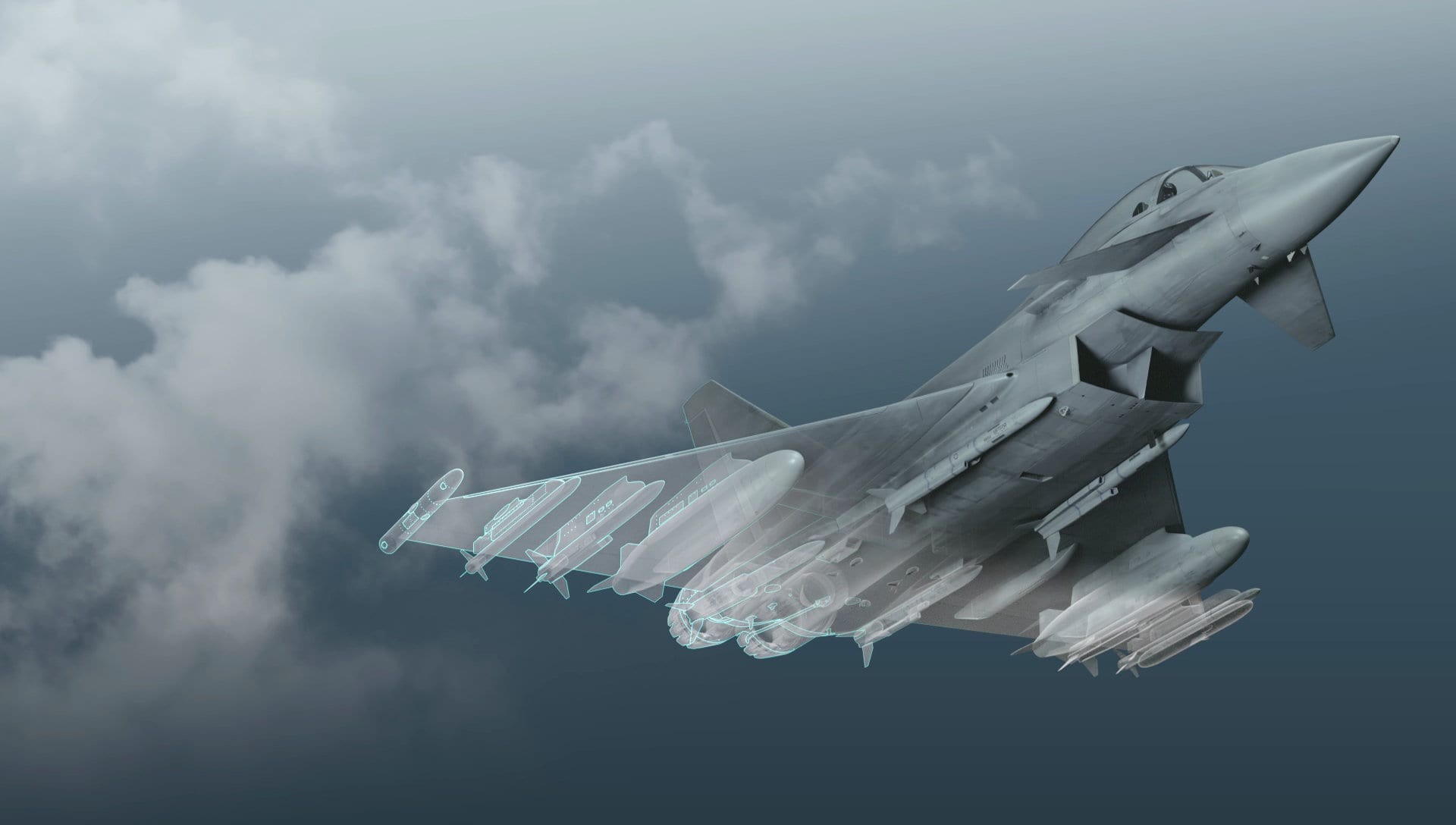
Throughout the aircraft flexible couplings connect the fuel pipework built into the three main fuselage sections and wings. These provide a simple method to connect the fuel tanks, which all have fuel-flow proportions to maintain the centre of gravity alongside relief valves to maintain air and fuel pressures. The intelligent computer-controlled fuel system ensures long-range, flexibility and safety. The maximum fuel capacity amounts 7,600kg.
Weapons
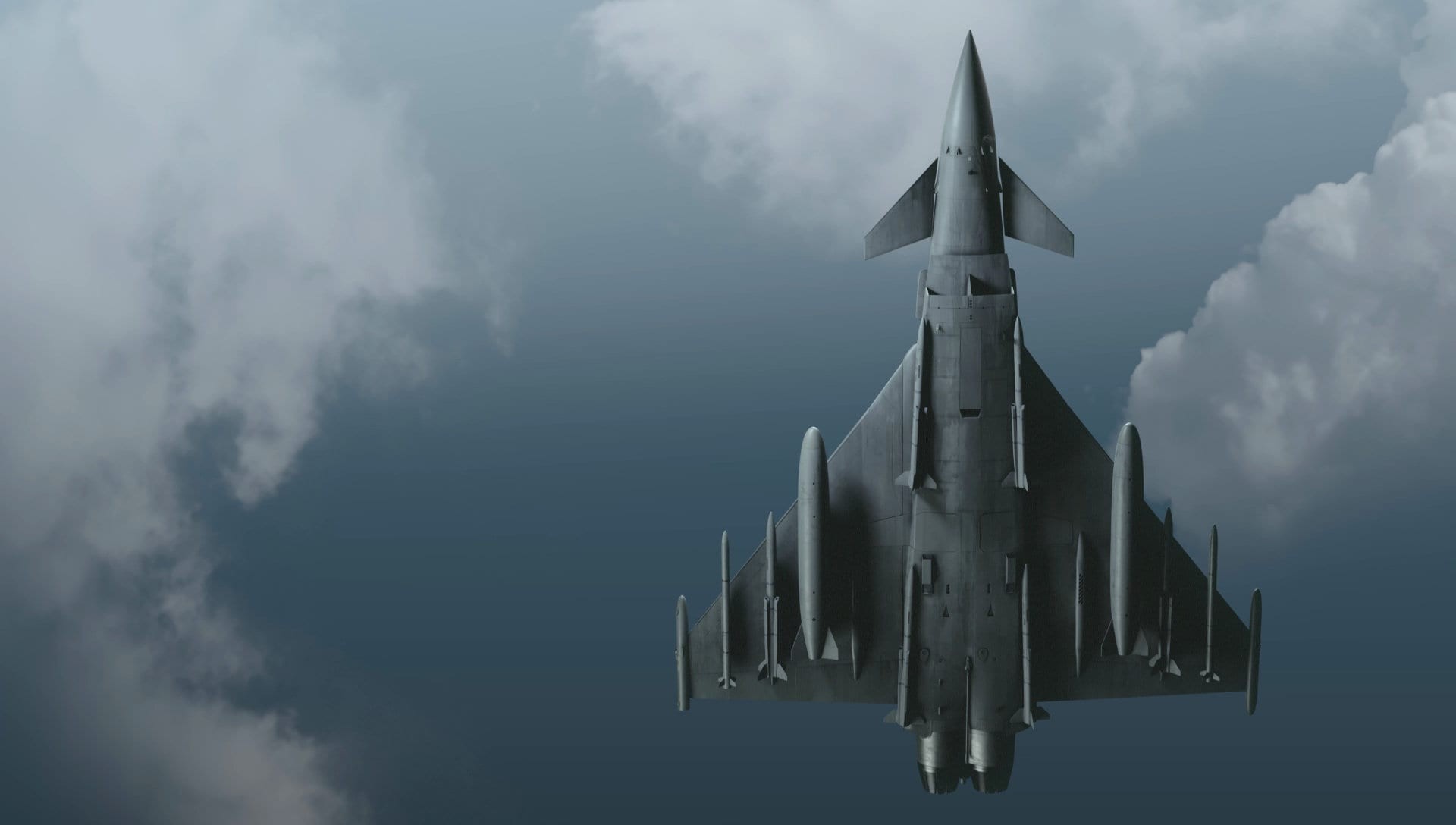
The Eurofighter Typhoon can carry a vast range of air-to-air as well as air-to-surface weapons. The aircraft offers weapon engagement zones starting close-in at visual range up to ling range engagements.
-
 Air-to-Air Missile
METEOR
-
 Air-to-Air Missile
IRIS T
-
 Air-to-Air Missile
ASRAAM
-
 Air-to-Air Missile
AMRAAM
-
 Air-to-Ground Missile
Stormshadow
-
 Air-to-Ground Missile
Brimstone II
-
 Air-to-Ground Missile
GBU-10
-
 Air-to-Ground Missile
GBU-48
-
 Air-to-Ground Missile
GBU-54 LJDAM
-
 Air-to-Ground Missile
Mk82
-
 Air-to-Ground Missile
Spear 3
-
 Air-to-Ground Missile
Taurus
-
 Air-to-Ground Missile
Paveway IV
-
 Air-to-Ground Missile
LDP Sniper
-
 Air-to-Ground Missile
LDP Litening III
-
 Air-to-Ground Missile
LDP Litening V
-
 Air-to-Ground Missile
LDP Damocles
-
 Air-to-Ground Missile
Recce XR
Life Support
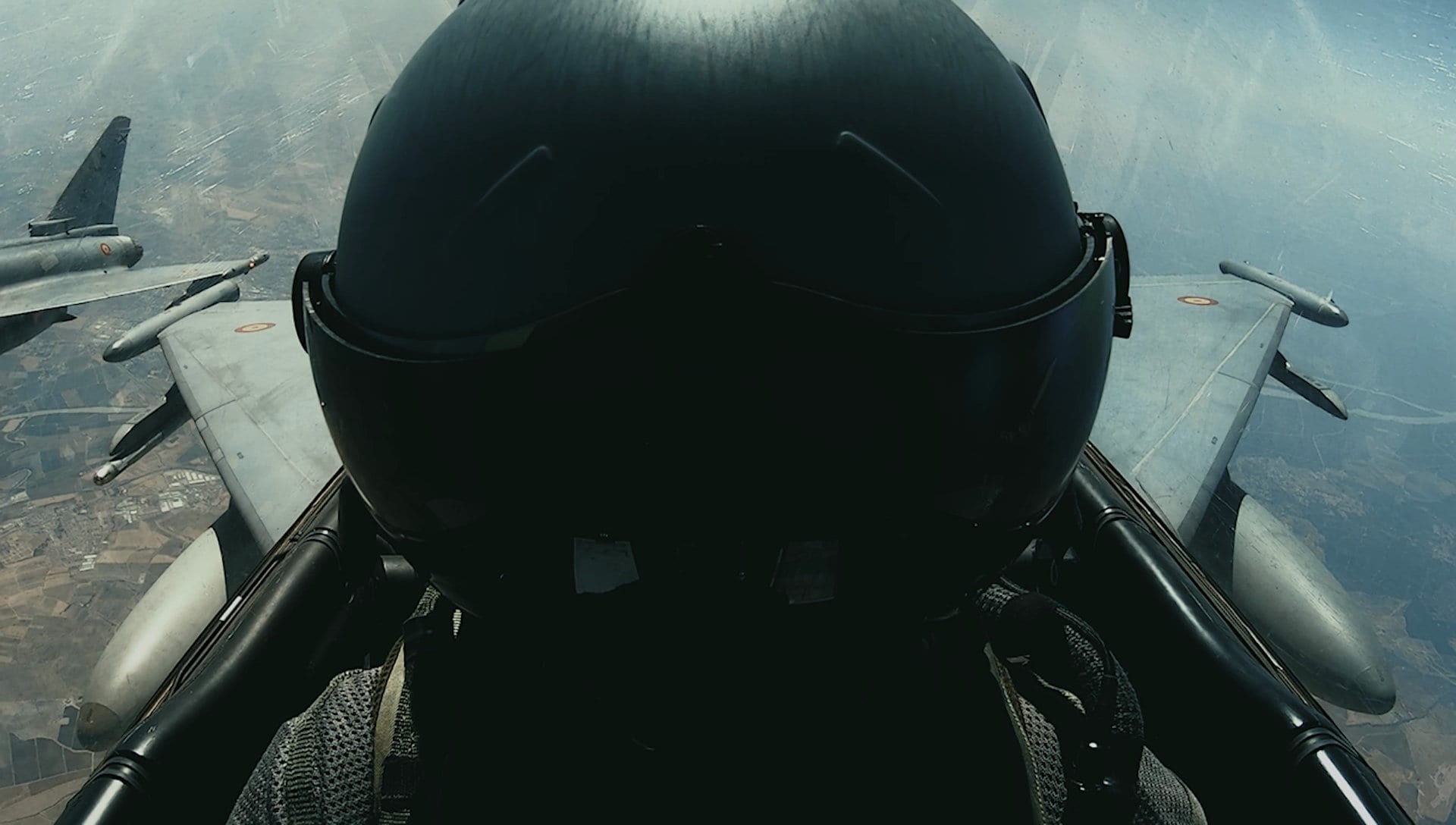
The Life Support System & Aircrew Equipment Assembly is unique to Eurofighter Typhoon and includes full-cover anti-G trousers, a chest counter-pressure garment and a liquid conditioning garment, as well as nuclear, biological, and chemical protection.
30% lighter
The Mk 16A ejection seat on the Eurofighter Typhoon is 30% lighter than equivalent ejection seats. This is achieved by combining the twin ejection gun outer cylinder tubes as both the propulsion system and the seat’s primary structure. The narrow head box also contributes to Eurofighter Typhoon’s excellent rear vision. The seat integrates an on-board oxygen generation system and communication systems. The simplified combined harness allows unassisted strap-in, and the passive leg restraint system avoids the need for the pilot to wear restraining garters. A second generation electronic sequencer is also incorporated. Reliability and maintainability are key elements of the design, with full access to in-cockpit components.
On Mission
The Eurofighter Typhoon is a genuine swing-role aircraft, with the ability to carry out several roles during a mission, shifting between air-to-air and air-to-surface roles.
Performance
The performance specifications of the Eurofighter Typhoon make it a benchmarking fighter aircraft, in several roles.